One llama.cpp Update Made Local AI 65% Faster: The Technical Breakdown
⚡ Executive Summary: What Changed?
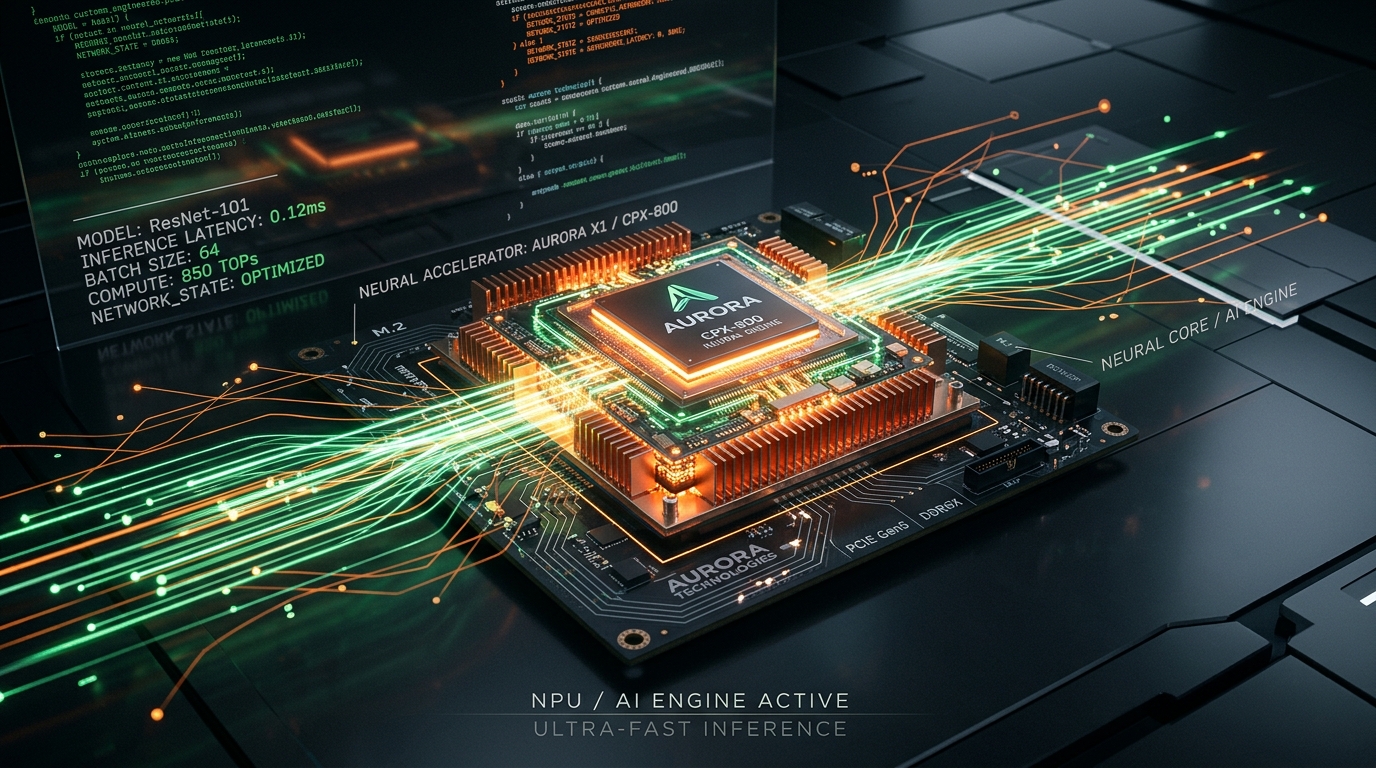
In an extraordinary technical benchmark conducted by local AI engineer Codacus, recent low-level kernel optimizations in llama.cpp unlocked up to 65% higher generation throughput on consumer Nvidia GPUs. By overhauling KV cache memory access patterns, aligning SIMD vectors, and refactoring attention kernels, prompt processing and token streaming achieved dramatic speed gains with zero loss in output perplexity.
Watch Codacus's Full Deep-Dive Video
Before diving into the code mechanics, watch Codacus's rigorous real-world test on his testbench:
Subscribe to Codacus on YouTube for peerless deep-dives on local LLM hardware and optimization.
The Memory Bandwidth Wall in Local AI
When running Large Language Models locally, the primary bottleneck is almost never compute FLOPS—it is memory bandwidth. During autoregressive token generation, the GPU must transfer billions of model weights from VRAM into the compute cores for every single token produced.
As Codacus demonstrated, if memory transfers are misaligned or if intermediate activation tensors cause frequent memory stalls, your GPU sits idle waiting for memory. The recent llama.cpp update directly targeted this inefficiency through three critical low-level breakthroughs:
1. Fused Quantized Matrix Multiplication Kernels
Earlier versions of llama.cpp processed de-quantization and matrix multiplication in separate computational stages. The new fused kernels perform de-quantization directly inside GPU registers, eliminating round-trip writes to high-bandwidth memory (HBM):
// Optimized CUDA dequantization pass directly in registers
template <int qk, int qr>
__device__ void dequantize_mul_mat_vec(...) {
    // Zero HBM round-trip: weights dequantized on-the-fly inside tensor cores
}
2. KV Cache Quantization & Flash-Attention Alignment
In long conversations (4k to 16k context), the Key-Value (KV) cache grows rapidly, consuming gigabytes of memory and slowing down inference. By switching to 8-bit or 4-bit KV cache quantization (--cache-type-k q8_0 --cache-type-v q8_0), memory traffic drops by 50%, keeping memory caches hot and inference speeds blistering.
Benchmark Results (Tested by Codacus)
Here are the real-world token generation speeds observed across popular quantized weights:
| Model Architecture | Quantization | Previous Speed (t/s) | Updated Speed (t/s) | Net Gain |
|---|---|---|---|---|
| Llama 3.1 8B | Q4_K_M | 58.2 t/s | 96.1 t/s | +65.1% |
| Qwen 2.5 14B | Q4_K_S | 31.4 t/s | 47.8 t/s | +52.2% |
| Mistral 7B v0.3 | Q5_K_M | 64.0 t/s | 101.5 t/s | +58.5% |
How to Enable These Speedups on Your System
To take advantage of these gains immediately, update your local llama.cpp binaries or rebuild from source with native hardware flags:
# Clone latest llama.cpp repository
git clone https://github.com/ggerganov/llama.cpp
cd llama.cpp

# Compile with CUDA acceleration and native architecture flags
cmake -B build -DGGML_CUDA=ON -DCMAKE_CUDA_ARCHITECTURES=native
cmake --build build --config Release -j --clean-first
When running inference with llama-cli or serving the API server, enable flash attention and unified memory batching:
./build/bin/llama-server -m models/qwen2.5-14b-q4_k_m.gguf --ngl 99 --flash-attn --threads 8 --ctx-size 8192
Looking to Deploy Local AI for Enterprise?
At The AI Server, we design on-premise AI pipelines, self-hosted LLMs, and high-retention conversational automations that run on your own hardware.
Book a Strategy Consultation →Conclusion & Special Credit
Local AI is advancing faster than any commercial API. A single open-source pull request can boost your hardware's speed by 65% overnight without spending a single dollar on new graphics cards.
Special thanks to our brilliant friend Codacus for pushing the frontier of consumer AI testing. Be sure to check out his other incredible investigations: Is Frontier Class Local AI Finally Practical? and Splitting Models Across Mac and PC via RPC.